
Grace Orwigsburg
Sundays @ 9:00 and 10:30am
Grace Tremont
Sundays @ 9:00am
Grace Online
Sundays @ 9:00 and 10:30am
LATEST TALK
A Simple Word
You don't have to fix someone's entire situation to make a meaningful difference. In the story of Naaman, everything starts with an unnamed young girl who has every reason to stay quiet, bitter, or focused on her own pain. Instead, she notices someone else's need and simply speaks up. Her brief comment sets Naaman on a journey that ultimately leads not only to physical healing, but to recognizing God for himself. Her story shows us what it can look like to live with a proactive spirit, a confident faith, and a loving heart. We may never know how God will use a conversation, an encouraging word, a small act of kindness, or simply showing up for someone. Our job isn't to change someone's world on our own—it's to pay attention, care enough to get involved, and trust God with what happens next.
OTHER RECENT TALKS
It's easy to look at everything going wrong around us—or everything we think is wrong with us—and assume God isn't working or couldn't possibly use us. Gideon felt the same way. He questioned God's presence because of his circumstances, pointed out the problems around him without realizing God wanted him to become part of the solution, and immediately listed all the reasons he wasn't qualified. But God's answer kept bringing Gideon's attention away from himself and back to one simple truth: "I will be with you." Gideon's story reminds us that God doesn't need us to be impressive, powerful, connected, or completely confident. He asks us to be faithful, willing, and dependent on Him. When our circumstances make faith difficult, we can remember what God has already done and trust that the same God who was faithful before is still with us today.
- October 18, 2026
- Josh Daubert
- Unlikely
- 1 Corinthians 1:27; Judges 6; Judges 6:1; Judges 6:6-7; Judges 6:11-16; Psalm 23:4; Isaiah 41:10; Judges 7; Judges 8
God often uses people we wouldn't expect to step into situations we couldn't fix on our own. Abigail steps into a conflict between David and Nabal that has quickly spiraled from an insult into a threat of violence. With a combination of wisdom, humility, courage, and a willingness to act, she interrupts the escalation and reminds David of two things he was beginning to forget: who God had called him to be and who God still was. Her story challenges us to pay attention when something around us is heading in the wrong direction, to be willing to step in wisely, and to remember that the greatest threat to the person God is shaping us to become is often not what happens to us—but how we respond to it.
- October 11, 2026
- Joshua Ott
- Unlikely
- 1 Samuel 25; 1 Samuel 25:3; 1 Samuel 25:22; 1 Corinthians 1:27

We have more ways than ever to fill our schedules, stay productive, and keep ourselves constantly entertained, but we haven't been given any more time. Scripture reminds us that life is shorter than we think and that we have a responsibility to choose how we use it. The goal isn't to cram even more into an already busy schedule—sometimes the wisest use of our time is actually to stop.
- October 04, 2026
- Josh Daubert
- It's Got You
- James 4:13-14; Psalm 39:4-5; Ecclesiastes; Ephesians 5:15-16; Matthew 6:19-21; Psalm 46:10; 1 Peter 4:7-10; Hebrews 10:24; Luke 10:38-42
Money isn't inherently good or bad. It's a tool. But because it's such a powerful tool, it has a unique ability to shape our priorities, influence how we see the world, and quietly take over more of our hearts than we realize. Jesus warns that we cannot serve both God and money, not because having money is wrong, but because money can easily become something we trust, chase, cling to, and allow to define us. The goal isn't to have nothing; it's to hold what we have loosely. We can use wisdom, remember that everything we have ultimately comes from God, live generously, and learn to trust Him with our future. There's nothing wrong with having money or possessions; we just don't want them to have us.
- September 27, 2026
- Joshua Ott
- It's Got You
- 1 Timothy 6:10; Ecclesiastes 5:10; Matthew 6; Luke 16:10-11; Psalm 24:1; 2 Corinthians
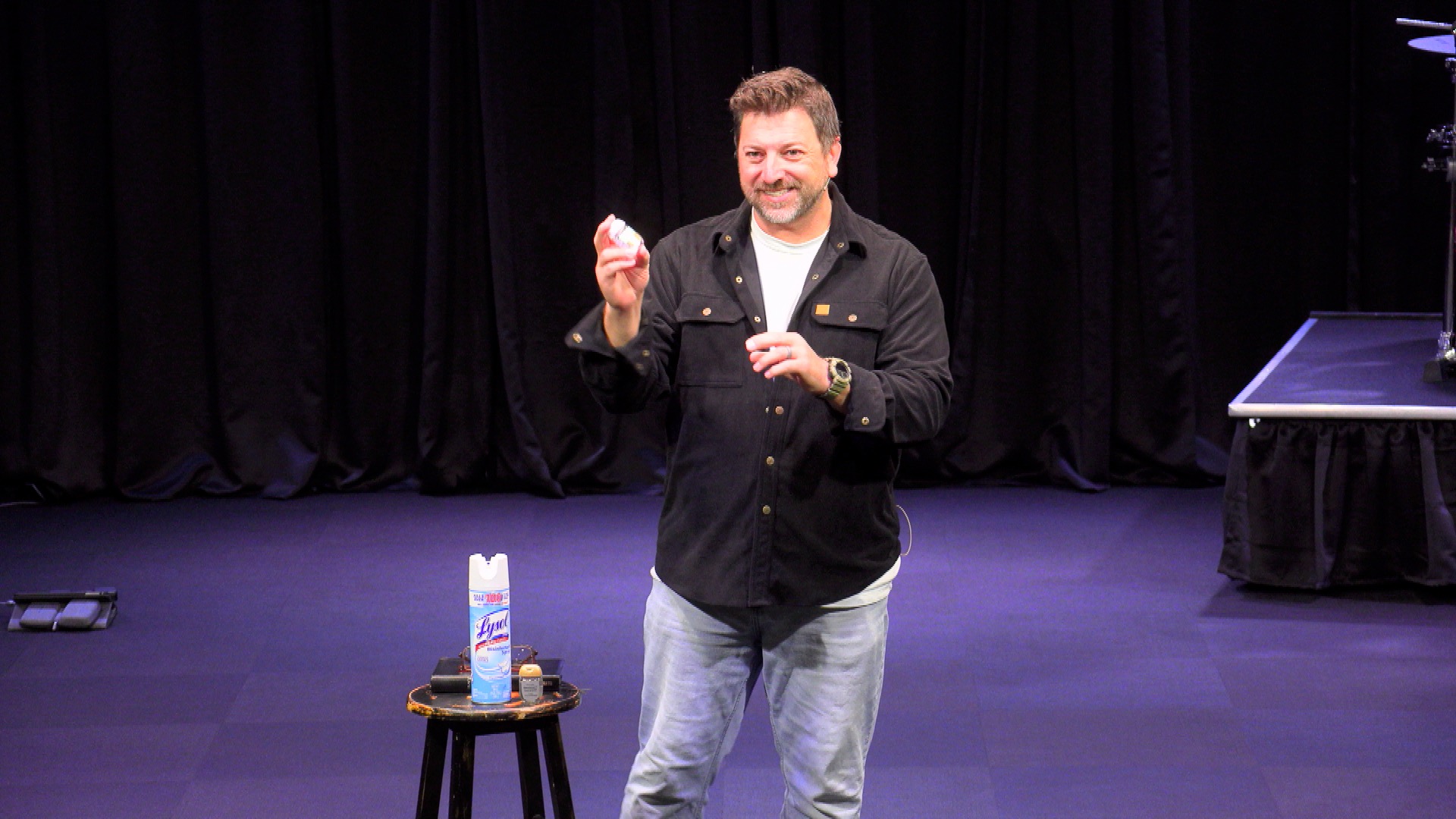
Worry has a way of taking a real concern and letting it grow until it takes up far more space in our lives than it should. Jesus' words challenge us to recognize that worry doesn't give us control—it steals our attention from the life we're actually living. Jesus reminds us that life is more than what we're worried about, that we matter deeply to God, and that His provision is greater than we realize. Instead of constantly asking "what if?" we're invited to redirect our attention toward God, stay present in the day we're actually in, practice gratitude and prayer, and continually trust Him with the things we cannot control.
- September 20, 2026
- Joshua Ott
- It's Got You
- Matthew 6:25-34; Ephesians 3:20; Psalm 34:8; Philippians 4:6

Life will give us plenty of reasons to feel tired, discouraged, or ready to quit, but we were never meant to carry everything or make it through on our own. We aren't enough on our own—and that's the point. God is more than enough. Because of what Jesus has already done for us, we can find the strength and hope to keep going. The challenge as the series ends isn't simply to say, "I won't quit." It's to decide what we're going to do next: What do I need to let go of? What am I living for? And what step can I take today to keep growing in my relationship with Jesus?
- September 13, 2026
- Josh Daubert
- Don't Quit Here
- Hebrews 12:1-3; 1 John 1:9