
Grace Orwigsburg
Sundays @ 9:00 and 10:30am
Grace Tremont
Sundays @ 9:00am
Grace Online
Sundays @ 9:00 and 10:30am
You've Got the Wrong Guy
- October 18, 2026 / Josh Daubert
It's easy to look at everything going wrong around us—or everything we think is wrong with us—and assume God isn't working or couldn't possibly use us. Gideon felt the same way. He questioned God's presence because of his circumstances, pointed out the problems around him without realizing God wanted him to become part of the solution, and immediately listed all the reasons he wasn't qualified. But God's answer kept bringing Gideon's attention away from himself and back to one simple truth: "I will be with you." Gideon's story reminds us that God doesn't need us to be impressive, powerful, connected, or completely confident. He asks us to be faithful, willing, and dependent on Him. When our circumstances make faith difficult, we can remember what God has already done and trust that the same God who was faithful before is still with us today.
KEY VERSES:
- 1 Corinthians 1:27
- Judges 6
- Judges 6:1
- Judges 6:6-7
- Judges 6:11-16
- Psalm 23:4
- Isaiah 41:10
- Judges 7
- Judges 8
HIGHLIGHTS:
-
God Uses Unlikely People
- The Unlikely series looks at ordinary and unexpected people God used to accomplish extraordinary things.
- We tend to choose people based on talent, confidence, influence, appearance, or experience.
- God often works differently. 1 Corinthians 1:27 says He chooses the foolish to shame the wise and the weak to shame the strong.
- The question isn't whether you're the obvious choice. It's whether you're willing to be used.
-
Israel Keeps Repeating the Same Cycle (Judges 6)
- Judges repeatedly shows Israel falling into sin, experiencing consequences, crying out to God, being rescued, finding peace, and then repeating the cycle.
- In Gideon's story, Israel has been oppressed by the Midianites for seven years.
- The situation has become so severe that people are hiding in caves while their food and livestock are being taken.
- Eventually Israel cries out, and God responds.
-
God Reminds Them Before He Rescues Them
- God sends a prophet who reminds Israel of everything He has already done for them.
- He rescued them from Egypt, protected them, and provided for them—but they had turned away from Him.
- The message raises a simple question for us: What are you worshiping?
- What gets our attention, time, affection, and deepest loyalty can reveal what really has our heart.
- Even when Israel is unfaithful, God continues to respond faithfully when they turn back to Him.
-
Gideon Doesn't Look Like a "Mighty Warrior" (Judges 6:11-12)
- Gideon is threshing wheat inside a winepress because he's hiding from the Midianites.
- In that moment, the angel of the Lord calls him a "mighty warrior."
- God sees something Gideon's current circumstances don't seem to support.
-
Wrong Idea #1: Letting Circumstances Define God's Presence (Judges 6:13; Psalm 23:4)
- Gideon's reaction is essentially, "If God is with us, why is all of this happening?"
- We can ask the same question when we're dealing with pain, disappointment, uncertainty, loss, or frustration.
- Our circumstances aren't reliable evidence for whether God is present.
- Psalm 23:4 reminds us that even when we're walking through the darkest valley, God can still be with us.
- Hard circumstances don't automatically mean we've done something wrong or God has abandoned us.
-
Wrong Idea #2: Pointing Out Problems Without Becoming Part of the Solution (Judges 6:14-15)
- Gideon has plenty to say about everything that's wrong.
- God's response is basically: "Then go. I'm sending you."
- It's easy to complain about our family, workplace, school, church, community, or culture.
- The harder question is: What am I actually doing to help make it better?
- Sometimes the person noticing the problem is exactly the person God wants to involve in the solution.
-
Wrong Idea #3: Making It About Who We Are Instead of Who God Is (Judges 6:15-16)
- Gideon immediately explains why he's the wrong person: his clan is weak and he's the least in his family.
- We have our own list: "I'm not qualified." "I don't know enough." "I'm not connected enough." "I'm not influential enough."
- God doesn't respond by telling Gideon how impressive Gideon really is.
- His answer is simple: "I will be with you."
- The story isn't ultimately about Gideon's ability. It's about God's presence and power.
-
God's Strength Matters More Than Yours (Isaiah 41:10)
- God says, "I will strengthen you" and "I will uphold you."
- We don't have to rely completely on our own wisdom, influence, talent, or strength.
- Our limitations don't automatically disqualify us when we're depending on God.
-
The 300-Man Army Makes the Point Even Clearer (Judges 7-8)
- Gideon begins with 32,000 soldiers against a much larger Midianite army.
- God eventually reduces Gideon's army to only 300.
- The point is to remove Israel's ability to claim the victory came from its own strength.
- God sometimes works through impossible-looking situations so there is no confusion about where the strength came from.
-
When Faith Is Hard, Remember
- When Israel cries out, God reminds them of what He has already done.
- What God has done in the past can strengthen our faith for what we're facing right now.
- If we only live by what we can currently see, faith will always be difficult.
- The God we read about in Scripture is still the same God today.
-
Be Willing to Be the Unlikely Person
- Don't spend all your energy pointing out what's wrong.
- Ask God how He might use you to bring change, encouragement, help, truth, or hope into that situation.
- You don't need to be the obvious choice. You need to be willing to trust the One who sends you.
TALK ABOUT IT:
- Why do you think Gideon's circumstances made it so difficult for him to believe God was really with him?
- When have you allowed something happening around you to shape what you believed about God's presence?
- What currently gets enough of your attention, time, or affection that it might be competing for the center of your life?
- What's one problem you regularly notice or complain about that you could actually help improve?
- What reasons do you usually give for why you're not qualified, capable, experienced, or ready?
- Why is God's answer—"I will be with you"—more meaningful than simply telling Gideon to believe in himself?
- What has God done in your past that you need to remember in your current circumstances?
- If you stopped worrying about whether you're the "right person," where might you be willing to take a step this week?
APPLY IT:
- When life gets difficult, don't automatically interpret your circumstances as proof that God has left you.
- Look honestly at what gets most of your time, attention, energy, and affection, and ask what that reveals about what you're worshiping.
- When you catch yourself repeatedly complaining about something, ask, "What can I actually do about this?"
- Choose one problem in your family, workplace, school, church, or community where you can move from critic to contributor.
- Write down the reasons you believe you're unqualified or unusable, then compare those limitations with what you believe about God's ability.
- Stop waiting to feel completely confident before taking a step you believe is right.
- When you're overwhelmed, remind yourself that God's promise to Gideon wasn't "You're strong enough." It was "I will be with you."
- Make a list of specific ways you've seen God's faithfulness in your past and return to it during seasons when faith feels harder.
- Ask God for wisdom, strength, and guidance about how you can become part of the solution instead of simply pointing out the problem.

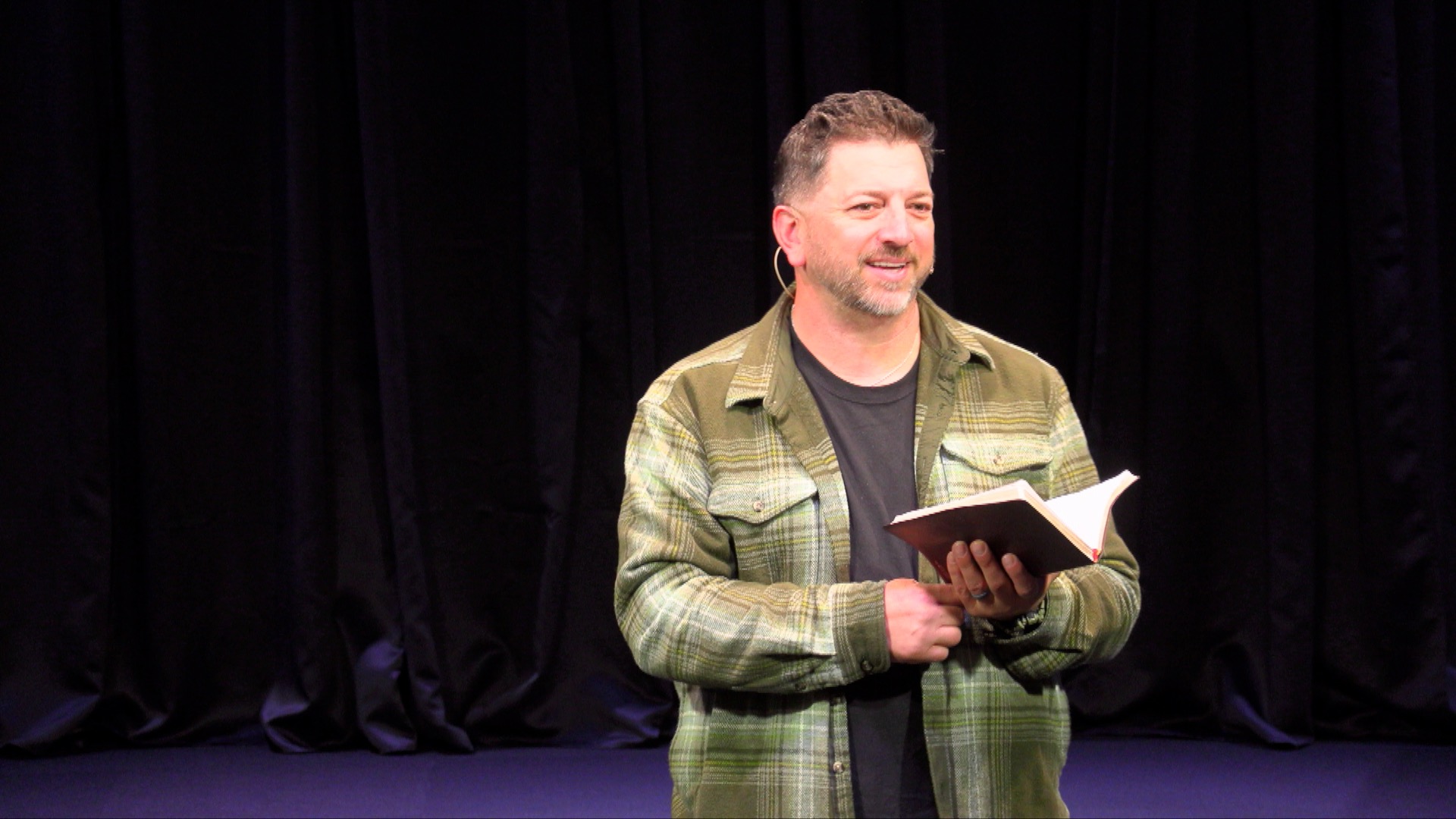


Josh Daubert is the Associate Pastor of Community at Grace Free Church. He is an Outreach Ministry graduate from Clarks Summit University, and has been a part of our church for a number of years. Josh previously interned for a summer at Grace Free Church, performing a variety of pastoral duties.